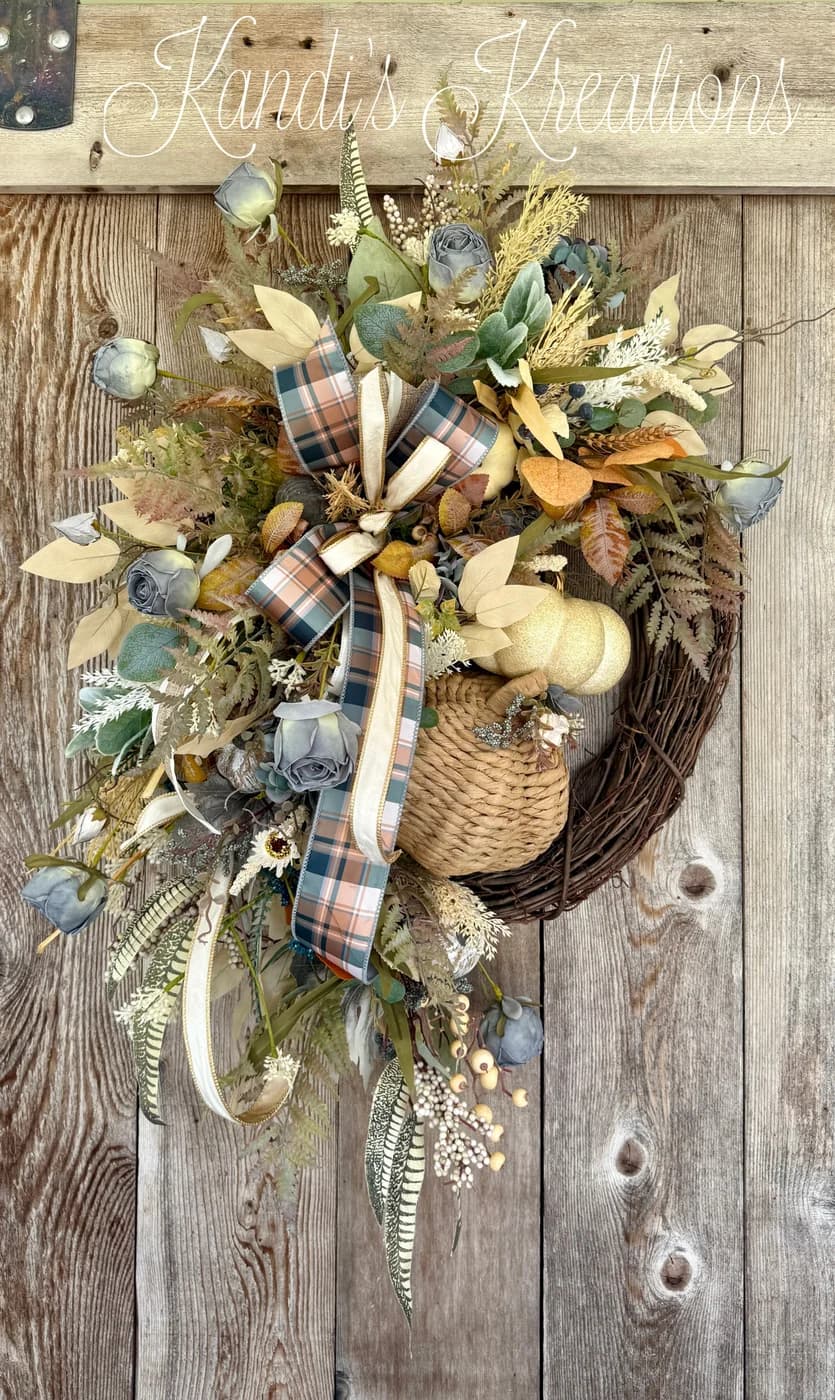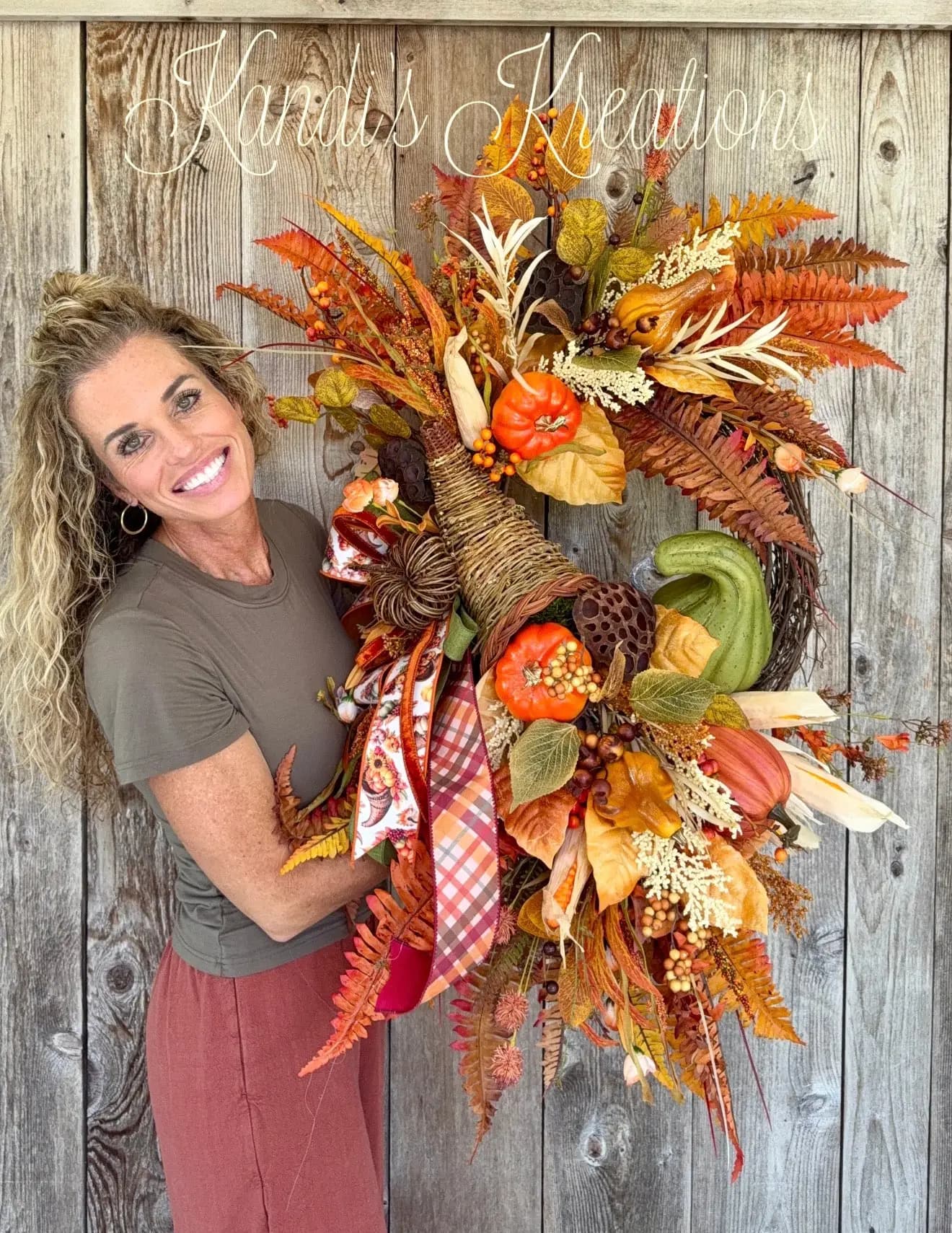
This is the most common message Kandi gets, and it is the question the free intro course was built to answer: "I followed the tutorial exactly and mine still looks off. What did I do wrong?"
Usually, nothing you can name. The stems went where the video said. The bow is tied. The colors match. It just does not look finished. Almost every time, the problem is balance, and balance is the thing a tutorial cannot teach by demonstration because you cannot see it in someone else's hands.
A wreath is a circle with weight
Think of a wreath as a clock face. Most designs put a focal point somewhere between ten and two, or down at the bottom between four and eight. Everything else on the wreath exists to hold that focal point in place visually, so the eye lands on it and then travels around the ring without stopping anywhere awkward.
When a wreath looks off, one of three things has usually happened:
- The focal point is too small for the ring, so the eye has nothing to land on.
- The focal point is in the right place but nothing balances it on the opposite side, so the wreath feels like it is tipping.
- The filler is evenly spread instead of weighted, so the wreath is technically full and still looks flat.
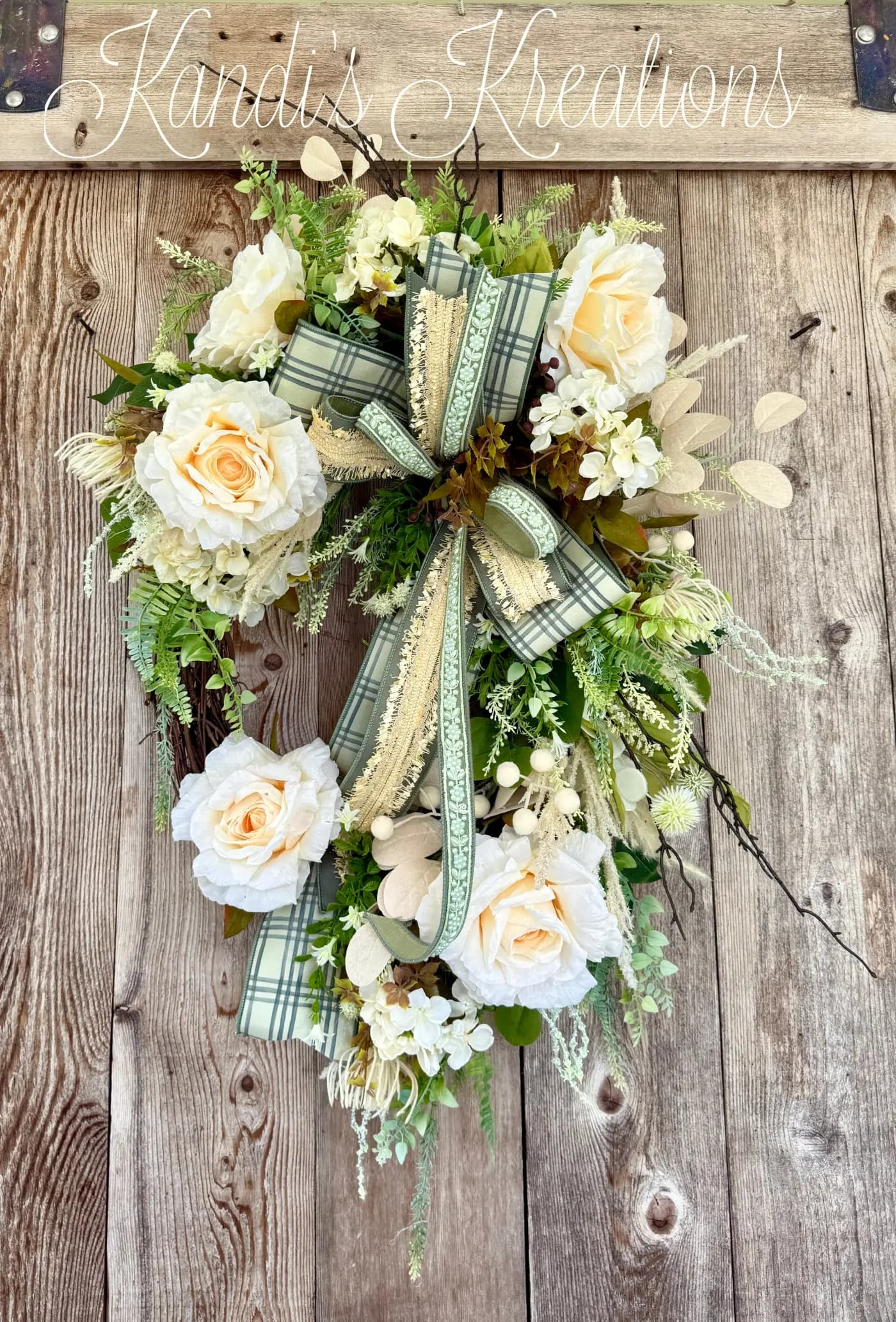
Look at the Elegant Cream Rose Grapevine Wreath. The roses cluster to one side, the greenery sweeps around from there, and the sage plaid bow anchors the opposite point. Nothing on it is symmetrical and nothing on it is accidental.
The three things that fix most wreaths
Cluster, do not scatter
Beginners space things out because it feels fair: a flower here, a flower there, a pick between. Designers cluster. Three roses together read as one strong shape. Three roses spaced around the ring read as three weak dots. If your wreath looks busy and empty at the same time, this is why.
Vary the depth
A wreath that looks flat usually is flat: everything is attached at the same height. Push some stems deep into the base, let others sit proud of it, and let a few trail past the edge of the ring. Depth is what makes a photo of a wreath look like an object and not a pattern.
Build it at the angle it will hang
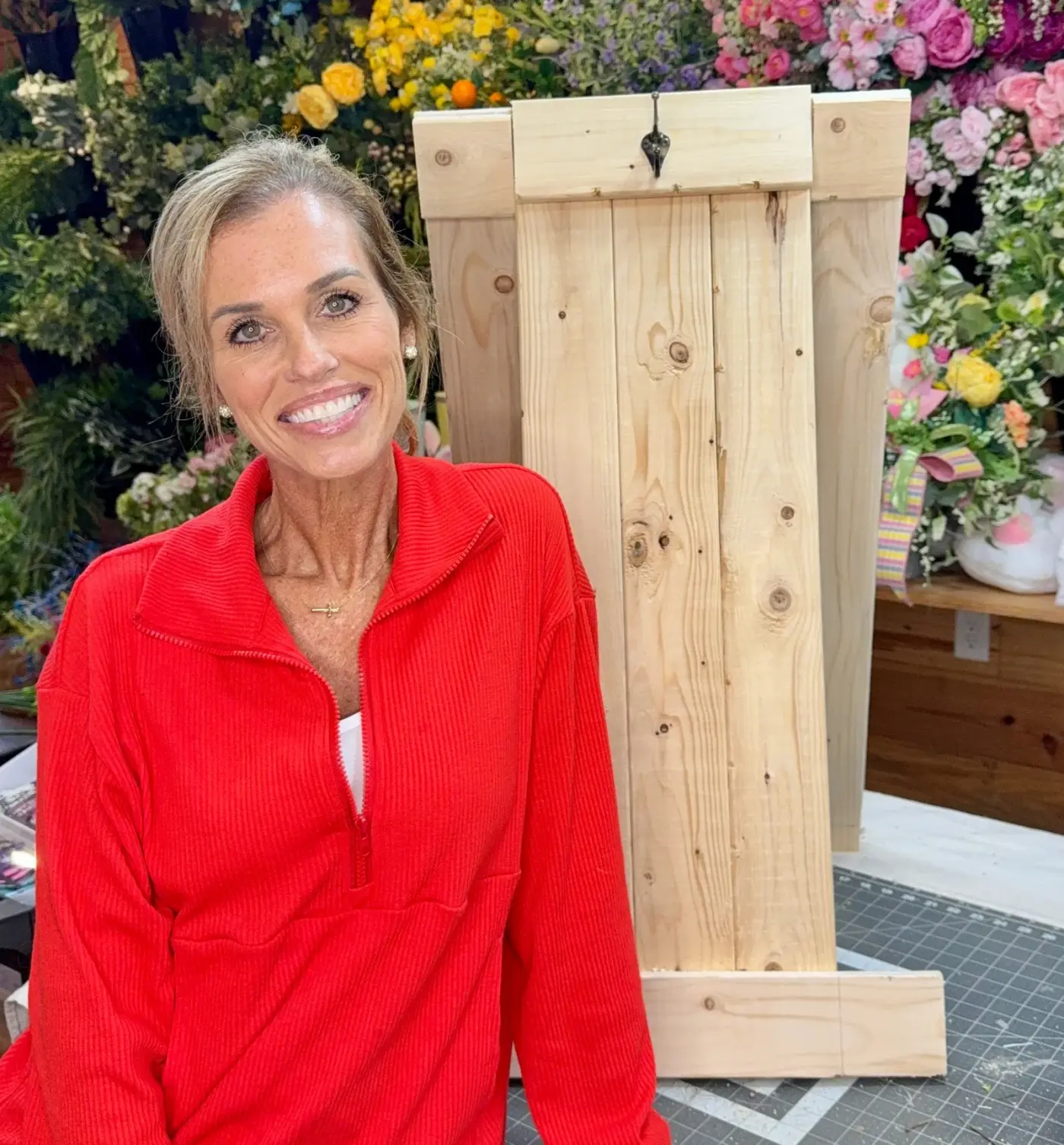
This one is the least obvious and the most important. A wreath assembled flat on a table is designed for a table. The moment it goes vertical, gravity moves every stem a little, and a design that looked balanced lying down starts to sag on one side. Kandi designed the Wreath Making Easel to solve exactly this: it holds the base at working height and at the angle it will actually hang, so what you build is what you get. There is a full post on it: build a wreath at the angle it will hang.
Supplies are rarely the problem
New makers tend to blame the materials. The florals were cheap, the mesh was the wrong brand, the ribbon was too thin. Sometimes that is true, but far more often a wreath built from modest supplies with good balance looks better than one built from expensive supplies with none.
That is the whole premise of how Kandi teaches: same technique, different supplies, beautiful results. The technique carries. A supply list is a guide, not a guarantee, and if you learn why a design works you can build it from what your local store actually has.
What the free course covers
The free Intro to Wreath Making mini course was written from these exact questions. It covers how to choose greenery for a design, the basic structure of a balanced wreath, and the common beginner mistakes and how to avoid them. The lessons are short, each under fifteen minutes, and there is no supply list to buy before you start.
If you want to go further, the Kreative Krew is where the same teaching happens live every week. The reason live matters is this exact problem: you can hold your wreath up to the camera and ask why yours came out differently, and get an answer from a working designer instead of rewatching a video that cannot see your work.
Frequently asked questions
Should a wreath be symmetrical?
Usually not. Most of Kandi's designs are asymmetrical with a clear focal point and a counterweight. Symmetry is fine for a very simple greenery ring, but the moment there is a focal element, asymmetry looks more intentional.
How full should a wreath be?
Full enough that the base is part of the design rather than the background. On grapevine, some vine showing is correct. On deco mesh, the mesh is the body and should look plump, not stretched.
My bow looks wrong. Is that the problem?
It might be. A bow that is too small for the wreath makes the whole thing look unfinished. Bow making is one of the first things in the Krew vault, and how to make a bow for a wreath covers the basics.
Can I send a photo and ask what is wrong?
Krew members do that every week in the community and in the live sessions. If you are not a member, the free course is the place to start, and the community that comes with the Krew is the place to bring the photo.